
Real-Time Tracking: Mastering Instant Intelligence
Beyond traditional analytics—capture, process, and act upon trillions of data points the exact millisecond they are generated.
1. The Architecture of Real-Time Ingestion
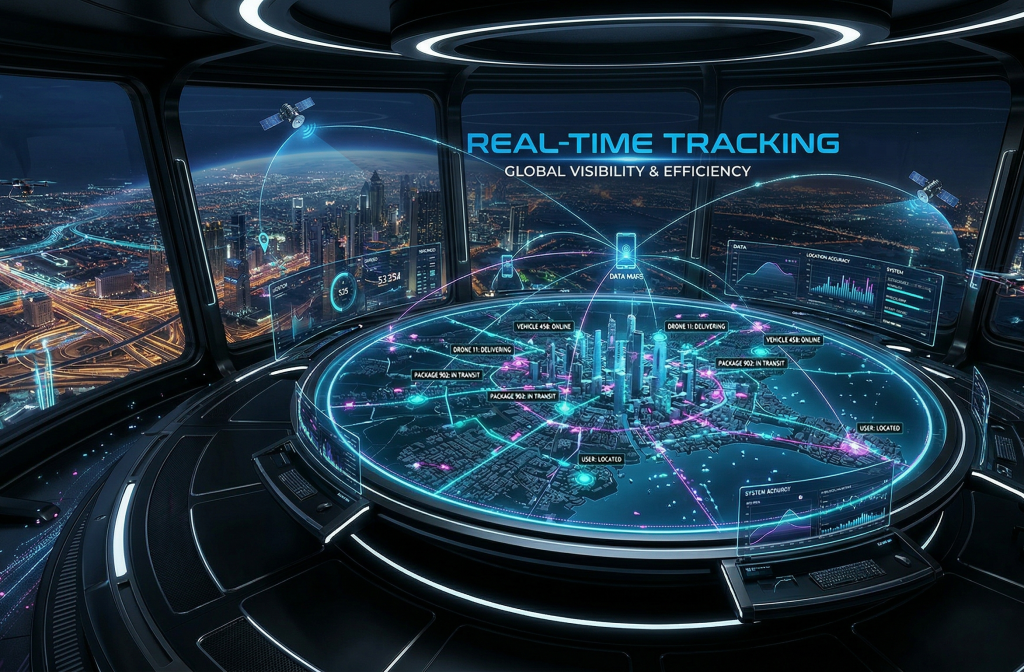
Real-time tracking begins with the ability to “listen” to data sources without delay. Unlike batch processing, which waits for data to accumulate, real-time systems use a seamless “Push” model.
- Event Streams: Every interaction, from a keyword click to a server log, is treated as an immutable “event.”
- Message Brokers: Technologies like Apache Kafka function as the central nervous system, routing massive event volumes instantly.
- Websockets: Maintains a persistent connection between users and servers for sub-second data synchronization.
2. Stream Processing vs. Batch Processing
To master real-time intelligence, one must differentiate between periodic and continuous processing methodologies:
- Batch Processing: Collects data over a set window (e.g., 24 hours). While efficient for historical deep-dives, it lacks the speed for active intervention.
- Stream Processing: Analyzes data record-by-record as it arrives. Frameworks like Apache Flink allow for the immediate detection of anomalies or market shifts.
3. Key Factors Impacting Real-Time Accuracy
The effectiveness of live tracking depends on three technical pillars that must be perfectly balanced:
- Latency: The millisecond delay between an event and its analysis. Mission-critical systems aim for “Ultra-Low Latency.”
- Data Integrity: Ensuring that high-speed ingestion does not lead to duplicated or missing records through “Exactly-once” processing logic.
- System Scalability: The ability to handle “Thundering Herds”—sudden spikes of millions of concurrent events without performance degradation.
4. Strategic Trade-offs: Speed vs. Cost
Implementing real-time tracking requires a disciplined approach to resource allocation:
- Infrastructure Overhead: Maintaining “Always-On” stream processors is significantly more expensive than scheduled batch jobs.
- Complexity vs. Actionability: The trade-off between building complex real-time models and having “good enough” instant metrics that drive immediate ROI.
5. Challenges in Live Data Environments
Real-time environments are inherently volatile and present unique engineering hurdles:
- Data Synchronization: Keeping the live stream perfectly aligned with the historical “Source of Truth” in the Data Warehouse.
- Privacy & Anonymization: Tracking user behavior in real-time while strictly adhering to GDPR/CCPA through instant data masking.
6. Real-Time Tracking in SEO & Marketing
For an authority agency like SEO Boosters, real-time tracking transforms strategy from reactive to proactive:
- Instant Rank Monitoring: Tracking how high-value keywords respond to search engine algorithm updates in real-time.
- Bot Behavioral Analysis: Monitoring search engine crawlers (Googlebot) as they navigate the site to optimize crawl budget instantly.
- Live Conversion Funnels: Identifying friction points in the user journey while the visitor is still on the page.
7. Future Trends: AI and the "Active" Web
The future of tracking lies in autonomous response systems:
- Edge Analytics: Moving processing power to the user’s device to eliminate network latency.
- AI-Driven Response: Algorithms that automatically adjust site content or pricing based on live intent signals.
- Hyper-Personalization: Delivering content that matches the user’s immediate physical context and live search intent.
8. Master Comparison: Real-Time vs. Traditional Tracking
Data Architecture
Strategic Comparison Framework
| Feature | Traditional (Batch) | Real-Time (Stream) |
|---|---|---|
| Response Latency | Minutes to Days | Milliseconds to Seconds |
| Processing Model | Accumulated Blocks | Continuous Event Flow |
| Primary Benefit | Historical Trends | Instant Action & Alerts |
| Infrastructure Cost | Optimized / Moderate | High (Always-On Servers) |
| Typical Tools | SQL, Hadoop, Excel | Kafka, Spark, Flink, Redis |
9. Why Real-Time Data is a Game Changer for SEO
In today’s fast-paced digital landscape, waiting for end-of-month reports is no longer enough. Real-time tracking empowers your business to make instant, data-driven decisions. By monitoring live user behavior, organic traffic spikes, and keyword ranking fluctuations, we can instantly pivot our SEO strategies to maximize your ROI. This proactive approach ensures you never miss a sudden opportunity or lose ground to competitors in search engine results.
10. 100% Transparent & Live Reporting Dashboard
At SEOBoosters, we believe in complete transparency with our clients. Our real-time tracking systems integrate seamlessly with advanced tools like Google Analytics 4 (GA4) and Google Search Console. We provide you with access to a live, easy-to-understand dashboard. Whether you want to check your daily visitor count, track goal conversions, or see which landing pages are performing best right now, all the critical data is just a click away. You remain in full control of your campaign, 24/7.